 January 22, 2014 | Shayna Robinson, MSPT, PhD

January 22, 2014 | Shayna Robinson, MSPT, PhD
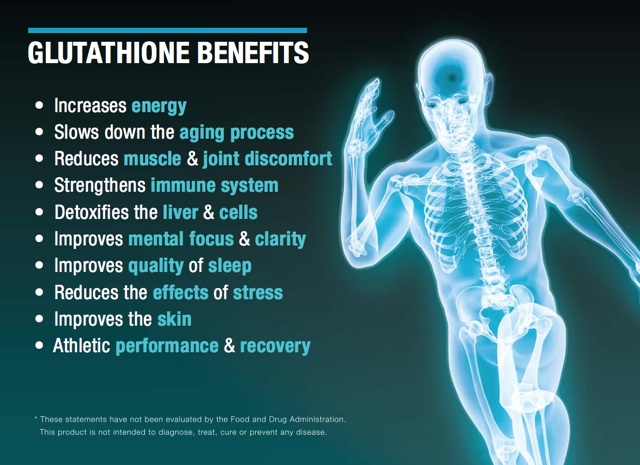 Glutathione is the mother of all antioxidants, the master detoxifier and maestro of immunity. GOOD NEWS, our body produces it. BAD NEWS, when the body becomes overloaded with toxins, it switches off the gene that allows for Glutathione to be created and recycled within the body.
Nearly every person who suffers from chronicfatigue syndrome, heartdisease, cancer, chronicinfections, autoimmune disease, diabetes, autism, Alzheimer‘s disease, Parkinson‘s disease, arthritis, asthma, kidney, liver disease and more is missing the functional ability of the GSTM1 gene.
 Ever wonder why you can’t change certain parts of your body when you exercise? It may be a lack of body awareness. Research shows that lack of body awareness creates an inability to engage muscle, and this awareness is an important tool in progress changes in your body. If there’s a certain part of your body that is especially challenging and just won’t budge, it may be because you are not activating the muscles that encompass it properly.
1) Start With Pressure; Notice where your body contacts the earth. For example, in this bow pose, my foot is in contact and is supporting my entire (5’10!) frame. That’s a lot of strength in that little foots. It’s all because I am applying pressure evenly across the four corners of my foot, and I am able to do this because I am cognizant of the muscular contractions in my foot.
2) Change Your Posture; Until you feel the proper activation, keep moving your body to a different position. For example, on my body, my left abdominal wall is weaker than my right, so I need a different angle to properly engage all my obliques and anterior abs. If I change the angle I am working in while engaging my left side, I get the same work done as my right.
3) Engage Your Multifidus; Remember those tiny muscles that support your spine I spoke of so lovingly last week? Yep, they’re integral in allowing you to engage all your muscles eloquently. Instead of over using the major muscle groups and getting bigger and bulkier because you lack the foundational strength of the multifidus, try working on pelvic tiles and engagement FIRST before you do any other exercise. I start my day with my multifidus pelvic tilts and ab exercises, then move on to other exercises that engage the larger muscle groups.
 Ever hear me talk about your Lumber Multifidus muscle? Often ignored by personal trainers, this muscle is essential in establishing a solid foundation of support for your lumbar spine, allowing you to progress your training to a higher level sans injury. Let’s talk about why it’s so important and how you can strengthen this integral stabilizer:
1) Without them, our spine would have problems!
The multifidus muscles help to take pressure off the vertebral discs so that our body weight can be well distributed along the spine. Additionally, the superficial muscle group keeps our spine straight while the deep muscle group contributes significantly to the stability of our spine. These two groups of multifidus muscles are recruited during many actions in our daily living, which includes bending backward, sideways and even turning our body to the sides. Studies have shown that the multifidus muscles get activated before any action is carried out so to protect our spine from injury.
2) The key is training your body to breathe while engaging your multifidus!
One of the reasons so many people have lumbar back pain is a result of not taking full breaths using their diaphram muscle in their lower abdomen. So often we take short quick breaths using our upper back and neck muscles because this is the most efficient way to get oxygen to our heart quickly. But when not in quick need, it’s important to contract that diaphram so that the multifidus learns it should be engaged all the time. Taking long sustained breaths in and out retrains your body to use your diaphram rather than your upper neck and shoulder muscles to breathe. You can imagine the tightness and pathology you may sustain by breathing from your neck, shoulders and back rather than from your deep abdomen–The upper extremity muscles get tighter and more bulky (theoretically causing lactic acid buildup and reduced oxygenation). This can result in a compression of the cervical spine and a weakness in the lumber multifidus.
3) Key exercises for keeping this muscle strong:

Cat & Cow Pose: Inhale, look up, pull belly in. Exhale, look down, push shoulders towards ceiling.

Pelvic Bridge: Press back flat into floor, raise hips towards ceiling. Hold for 2-3 seconds. Repeat 10x.
 The immune system is supposed to be our greatest defense in defending against pathogens and rebuilding damaged tissue. Without it, your cold would win and your sore back would never heal. Chronic inflammation, brought on by an immune system in overdrive, could lead to illnesses including cancer, heart disease and diabetes.
Inflammation-signaling cells or C-reactive proteins (CRP), is a molecule released by the liver as part of the immune response. These levels should go back to normal levels after defending the body, but instead hang out in the blood. What keeps the battle going? Recurring irritants, such as cigarette smoke, for one. Or, as we now know, carrying too much extra weight, or simply getting older.

 The first ever yoga study published in the Journal of the American College of Cardiology found yoga to be a safe, effective and relatively cheap therapy for improving the lives of heart patients.
The study conducted by The University of Kansas Hospital found that,
“
 What do the Lakers star Kobe Bryant, the quarterback Eli Manning, the Olympic marathon runner Ryan Hall and the presidential candidate Mitt Romney all have in common? Foot pain. Believe it or not, Plantar Fasciitis is one of the most common sports injuries, and it’s also one of the least understood.
While Plantar Fasciitis is a very common injury, the consensus on the cause and treatment remains clinically a mystery. Little is understood, medically, about overuse sports injuries in general and that’s why, as a result, they remain difficult to treat.
 Most medical professionals agree that Plantar Fasciitis is, very basically, an irritation of the soft tissue that runs along the bottom of the foot, attaching the heel bone to the toes and forming your foot
 Yes, even superstars get injured.
Doctors discovered that she suffered a labral tear in her right hip. Actually this is not an uncommon injury in athletes. Read on for preventative exercises and a lesson in hip anatomy!
Symptoms include hip pain or a “catching” sensation in your hip joint. Initial treatment may include pain relievers and physical therapy (see below for exercises). Using arthroscopic techniques, surgeons can remove loose fragments from within the joint and trim or repair the hip labral tear. Surgery should only be for a worse case scenario injury as complications like scar tissue, range of motion and infection can result.
The labrum is a strong fibrocartilage which forms a gasket around the socket of the head of the femur. It secures the femur to the pelvis. Here’s a breakdown of the anatomy:
 The hip is a ball-and-socket joint. The socket is formed by the acetabulum, which is part of the large pelvis bone. The ball is the femoral head, which is the upper end of the femur (thighbone).
Part of Lady Gaga’s issue lies in her workout routine. Obviously during performance, she is used broad range of motion, dynamic movements. To prepare for these quick broad movements, an athlete must strengthen the muscles that support the joint–specifically your pelvic girdle. These muscles prevent your pelvis from rotating forward or back, maintaining a neutral position. When your pelvis has laxity (or flexibility) this often means you may be prone to pain in your hips, back, and legs due to the incorrect position. Do these exercises to prepare for dynamic movement and stabilize the pelvis. I recommend 2x per day, 10 reps each.


Flexibility is as important to your health as cardio exercise. There are many doctors who believe that stretching does not decrease your risk of injury, but this is one doctor who does. Lengthening and toning your muscles aids in the ability to respond to rapid muscular changes–so when you slip on the ice, your body is able to catch itself and not tear a muscle. Prepping your muscles doesn’t always prevent injury–you may have a genetic proclivity for injury–but it should change the way your body adjusts to these rapid changes. Try these stretches for flexibility 60seconds each, 1x/day post exercise to increase your stretch factor.


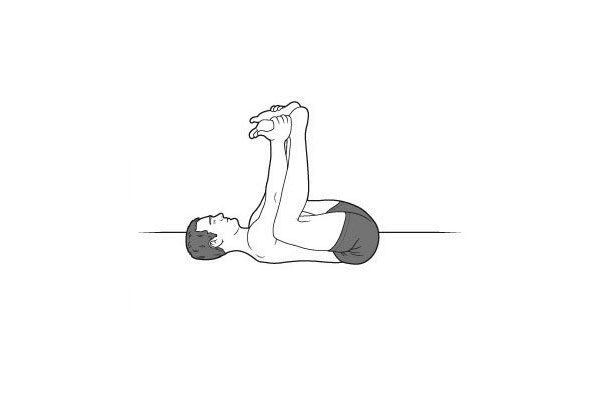


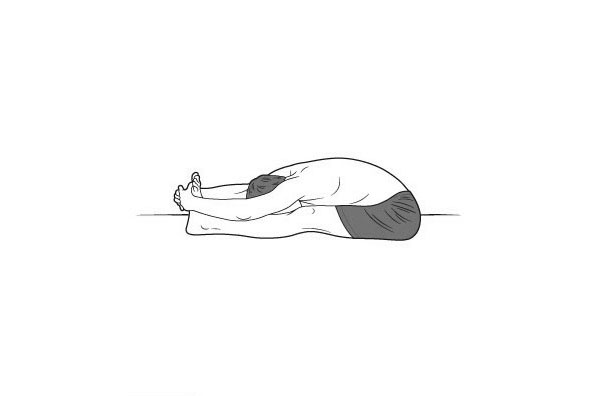
Flexibility is recognized as an important component of physical fitness. Like other components of fitness, flexibility is more important for some sports than others. For example, long distance runners tend to be relatively inflexible because the activity of running does not require large deviations in motion. However, sprinters, and especially hurdlers, require excessive hip motion for sprinting and hurdle clearance. Not only are flexibility requirements sports-specific, but they can also be joint- specific. In general, athletes must have sufficient musculoskeletal flexibility to meet the demands of the sport, otherwise top performance will not be achieved and injury risk will increase.
An individual
Proudly powered by WordPress
Theme: Esquire by Matthew Buchanan.

